











❄️ The Long Dark: Why This Frozen Survival Game Still Grips Players
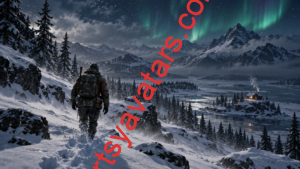 Some survival games overwhelm players with enemies, explosions, and nonstop action. The Long Dark takes a very different approach. It places the player in a vast, frozen wilderness after a geomagnetic disaster and builds tension around weather, limited supplies, exhaustion, wildlife, navigation, and the simple question of whether you can survive another day. Hinterland describes the game as a single-player exploration-survival experience, and its current editions include the open-ended Survival Mode as well as the narrative-driven WINTERMUTE mode.
That quieter approach is exactly what makes The Long Dark survival game so interesting. Instead of turning survival into a checklist, it constantly asks you to make uncomfortable choices. Do you continue toward shelter before the weather changes? Do you carry extra food or leave room for tools? Is exploring one more building worth the calories, warmth, and daylight it will cost?
🌨️ Survival Begins With the Environment
The frozen wilderness is not just scenery. It is one of the central forces shaping every decision. In Survival Mode, players need to manage core conditions such as hunger, thirst, fatigue, and cold while balancing their resources against the energy required to obtain more. Steam’s official game description also lists activities such as hunting, fishing, trapping, climbing, mapping, searching for gear, and avoiding dangerous wildlife and environmental illnesses.
This creates a fascinating rhythm. A simple trip from one shelter to another can become a small expedition. A calm morning can encourage exploration, while worsening conditions can suddenly make the nearest safe building feel very far away.
For gamers who enjoy systems that interact with one another, this is where much of the appeal comes from. Temperature affects travel. Travel affects fatigue. Fatigue influences how long you can keep moving. Food and water determine how much freedom you have to stay away from shelter. One problem often creates another.
🔥 The Long Dark Survival Game Rewards Preparation
Preparation matters because the game rarely treats resources as unlimited. Clothing, food, medicine, tools, fire-starting materials, and other supplies all compete for space and attention. Carry too much and travel becomes harder. Carry too little and a routine journey may become dangerous.
This turns inventory management into something more meaningful than sorting items. Every object has an opportunity cost. The question is not simply, “Is this useful?” It is, “Is this useful enough to carry right now?”
That distinction creates some of the game’s strongest player-driven moments. You may remember the day you left behind an item that would have helped later, or the time one small emergency supply changed the outcome of a difficult journey. Those moments feel personal because they come from your own decisions rather than from a scripted cinematic.
🧭 Exploration Feels Risky Instead of Routine
Many open-world games encourage players to rush from marker to marker. The Long Dark makes movement itself part of the challenge. The official Survival Mode description emphasizes a large Northern Canadian wilderness made up of multiple connected regions, with settlements, mountains, mines, farmland, coastlines, and remote winter terrain to explore.
Because survival resources are always part of the calculation, exploration can feel unusually deliberate. Reaching a new location is not only about discovering what is there. You also have to think about getting back, finding shelter, maintaining your condition, and deciding whether the trip was worth the risk.
That makes discovery more satisfying. A cabin is not merely an environmental prop. It can represent warmth. A road can become a navigation aid. A landmark can help you orient yourself when visibility changes. The world gradually becomes meaningful because you learn how to survive inside it.
🐺 Wildlife Adds Uncertainty Without Turning the Game Into a Shooter
Wildlife introduces another layer of risk. The official Survival Mode materials identify animals such as wolves, bears, moose, deer, rabbits, and crows as part of the wilderness ecosystem.
The important part is that wildlife does not replace the survival systems. It adds pressure to them. Avoiding danger may force you to take a longer route. An encounter can consume supplies or leave you in poor condition. Hunting may provide valuable resources, but it also requires preparation and carries its own risks.
As a result, the most memorable tension often comes from situations where several problems overlap at once: low visibility, limited daylight, exhaustion, uncertainty about shelter, and wildlife somewhere nearby.
🕯️ Quiet Moments Make the Dangerous Ones Stronger
One of the most distinctive qualities of The Long Dark is its pacing. There can be long stretches where very little appears to happen. You walk. You listen to the weather. You organize equipment. You prepare food. You plan a route.
Those calm moments create contrast. When something does go wrong, it matters because the game has already taught you how fragile a stable situation can be.
This makes it a strong choice for players who enjoy atmosphere and self-directed play. The tension comes less from constant scripted events and more from uncertainty. You are often trying to prevent a crisis rather than simply reacting to one.
🎒 Survival Mode Creates Your Own Stories
Hinterland describes Survival Mode as a free-form, non-narrative sandbox where survival itself is the objective. The official materials also state that death in Survival Mode ends that run, making individual decisions especially meaningful.
This structure naturally creates personal stories.
You might spend several in-game days carefully establishing a safe routine, only to make one overconfident journey that changes everything. Another playthrough may become a story about conserving supplies through terrible weather. A different run might revolve around exploration, mapping, or attempting to remain in a difficult region for as long as possible.
Because these stories emerge from gameplay systems, two players can come away with very different memories even when they are exploring the same world.
🎮 Who Will Enjoy The Long Dark?
This game is especially appealing if you enjoy:
- ❄️ harsh environmental survival
- 🧭 slow, meaningful exploration
- 🎒 resource and inventory decisions
- 🔥 planning routes around shelter and weather
- 🐾 wildlife-based risk
- 🌲 atmospheric wilderness settings
- 🧠 games that reward patience and observation
- 📖 both open-ended survival and story-focused play
Players looking primarily for fast combat may find the pacing slower than expected. But for gamers who enjoy surviving because of smart decisions rather than sheer firepower, that deliberate pace is part of the appeal.
💡 Beginner Mindset: Think Like a Survivor, Not a Tourist
A useful way to approach the game is to treat every trip as a cost-benefit decision.
- Check your condition before travelling. A journey that looks short can become dangerous if your basic needs are already low.
- Keep emergency supplies. The most valuable item is often the one you saved for the moment your plan failed.
- Learn landmarks. Familiar terrain becomes an important survival resource.
- Do not let curiosity erase caution. One more building, hill, or road can tempt you farther from safety.
- Respect worsening conditions. Turning back can be a successful decision.
- Plan for the return trip. Reaching a destination is only half the journey.
These principles are intentionally broad because discovering the game’s systems is part of the experience.
🏔️ Why The Long Dark Remains Memorable
The Long Dark works because it makes ordinary survival decisions feel important. Warmth matters. Distance matters. Daylight matters. A few supplies can matter. Choosing not to take a risk can matter just as much as taking one.
Its frozen wilderness gives players space to create their own stories, while its survival systems ensure that those stories always have consequences. For players who enjoy atmospheric exploration, resource management, and tension built from uncertainty rather than constant action, it offers a distinctive kind of challenge.
And perhaps that is the game’s greatest strength: surviving one more day can feel like an achievement all by itself. ❄️🔥
🎨 ArtsyAvatars Note: This is an independent editorial article created for ArtsyAvatars.com. ArtsyAvatars is not affiliated with, endorsed by, or sponsored by Hinterland Studio Inc. Game names are referenced only to identify and discuss the game. No official artwork, logos, screenshots, dialogue, or proprietary game assets are reproduced in this article.