











🚀 Surviving Mars: Build, Survive, and Create a New Home on the Red Planet
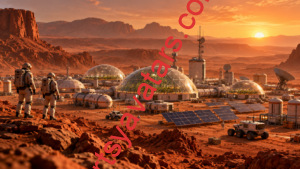 What if building a city was only half the challenge?
Imagine creating that city on a frozen, dusty planet where every drop of water, every unit of electricity, and every breath of oxygen matters. 🔴🚀
That is the fascinating idea behind Surviving Mars, a science-fiction colony-management game that turns the dream of settling Mars into a giant strategic puzzle.
Instead of simply placing buildings and watching a population grow, you must create the infrastructure that allows human life to exist in the first place. Machines arrive before most people. Power networks must work. Resources need to reach the right places. Habitats must support colonists. And one poorly planned expansion can create problems across your entire settlement.
For gamers who enjoy city builders, colony simulators, resource management, automation, and strategy games, Surviving Mars offers an experience where creating a functioning settlement can feel like an achievement of its own. 🏗️🪐
🌌 Welcome to a Planet That Does Not Want You There
Mars looks incredible.
But it is hardly an easy place to establish a civilization.
Your mission begins with planning, exploration, infrastructure, and robotic support. Before turning your settlement into a thriving community, you need to create the basic systems that make expansion possible.
That includes managing things such as:
⚡ Electricity
💧 Water
🌬️ Oxygen
📦 Resources
🤖 Automated drones
🏗️ Construction
🔬 Research
🥬 Food
🧑🚀 Colonists
🚚 Transportation and logistics
This creates one of the game’s most interesting ideas:
Before you can build a successful city, you first have to build the systems that allow a city to survive.
That difference gives every new settlement a satisfying sense of progression.
🤖 Robots First, Humans Later
One of the coolest aspects of the Mars-colony fantasy is the importance of automation.
Robotic drones help transport supplies, construct infrastructure, perform maintenance tasks, and keep your developing settlement functioning.
You quickly discover that having resources is not always enough.
Those resources also need to be available where they are required.
A distant construction area may need materials. A growing settlement might require additional storage. Expansion can stretch the reach of your logistics network.
Suddenly, something as simple as moving resources becomes another strategic challenge.
And that is exactly what colony-management fans tend to enjoy.
You are not merely building structures.
You are building a functioning system. ⚙️
🏗️ Every Expansion Creates Another Problem to Solve
A new building sounds useful.
But what will power it?
A new dome sounds exciting.
But can your infrastructure support it?
Additional colonists could increase production.
But where will they live? What will they eat? Will there be enough services available?
That interconnected design helps make expansion interesting.
Nearly every major decision can create another requirement somewhere else in your colony.
Your settlement gradually becomes a huge network of:
Resources → Infrastructure → People → Production → Expansion
When the system works properly, watching your colony grow is extremely satisfying.
When it does not work properly…
Well, that is when things become interesting. 😅
🫧 Domes Change Everything
Mars becomes much more complicated once your colony starts welcoming human settlers.
Machines can operate under harsh conditions.
People need considerably more support.
Your colonists require suitable living environments, jobs, food, services, comfort, and functioning life-support infrastructure.
Suddenly, your colony stops feeling like an industrial construction site and starts feeling like a society.
Different colonists can contribute different skills and needs, which means population management becomes another layer of strategy.
You might have plenty of housing but not enough workers for an important industry.
You might have workers but inadequate services.
You might have enough resources to survive while still creating a colony where nobody particularly enjoys living.
That creates an important progression:
First, keep people alive.
Then, give them a reason to stay.
🧑🚀❤️
🔬 Research Turns Problems Into Opportunities
Technology plays a major role in the growth of a Martian settlement.
Research can help unlock new possibilities and improve how your colony operates.
This creates a satisfying gameplay cycle:
🔴 Discover a problem
⬇️
🔬 Research new possibilities
⬇️
🛠️ Improve the colony
⬇️
🏗️ Expand
⬇️
😅 Discover an even bigger problem
And then you repeat the process.
Early decisions often revolve around basic survival and infrastructure.
As the colony grows, your goals can become much more ambitious.
That feeling of moving from a fragile outpost toward a large, sophisticated settlement is a major part of the appeal.
🕵️ Mysteries Make Mars Less Predictable
Mars is not only a giant construction site.
The game also incorporates Mysteries, which introduce unusual situations and story-driven challenges into colony play.
These events help make individual colonies feel less predictable.
That is important in a management game because experienced players can eventually learn efficient building strategies.
Unexpected situations force you to respond rather than simply follow the same perfect blueprint every time.
Your carefully planned settlement might suddenly face circumstances you never included in the original plan.
And those moments often create the stories you remember afterward.
☄️ Disaster Can Produce the Best Stories
Perfect colonies are satisfying.
Nearly collapsing colonies can be unforgettable.
Perhaps you expanded too aggressively.
Maybe power production cannot support your latest development.
Perhaps your logistics network has become inefficient.
Maybe you brought in more colonists than your infrastructure could comfortably support.
Suddenly, your relaxing city builder becomes a rescue mission.
🚨 Find the bottleneck.
⚡ Restore critical infrastructure.
📦 Redirect resources.
🤖 Reorganize drones.
🧑🚀 Protect the population.
And somehow…
Your colony survives.
That recovery can feel more rewarding than simply building everything perfectly from the beginning.
🧠 Surviving Mars Rewards Planning
The game encourages you to think beyond the next building.
A strong player begins asking questions such as:
What happens if this power source fails?
Can this part of the colony access enough resources?
Am I expanding faster than my infrastructure can handle?
Do I have enough storage?
Can my colony absorb another group of settlers?
That creates a strategic experience where preparation can matter just as much as construction.
The result is a game that appeals especially strongly to players who enjoy optimization and long-term planning.
🎯 Who Should Play Surviving Mars?
You may enjoy Surviving Mars if you like:
🏙️ City-building games
🧠 Strategic planning
📦 Resource management
🚀 Space-colonization themes
🤖 Automation
🏗️ Base building
🔬 Technology progression
🧑🚀 Colony management
📊 Optimization
🌌 Science-fiction environments
It can be particularly satisfying for players who enjoy watching a small starting base slowly transform into something complex.
If your favorite gaming question is:
“How can I make this system work better?”
…you may find yourself very comfortable on Mars.
🆕 Original Surviving Mars vs. Surviving Mars: Relaunched
There is now an important distinction for anyone discovering the series.
The original Surviving Mars was released in 2018.
In 2025, Paradox Interactive released Surviving Mars: Relaunched, an updated and expanded version featuring revised visuals and interface elements, previous expansions, and additional content.
This means new players searching for Surviving Mars may encounter information about both versions.
If you are looking at a guide, mod, expansion, or gameplay discussion, checking which version it refers to can save some confusion.
The important part is that the central fantasy remains compelling:
Build a settlement on Mars and somehow turn an extremely hostile environment into a home.
❤️ Why the Concept Works So Well
Surviving Mars succeeds because its location is not merely decoration.
Mars changes the meaning of normal city-building decisions.
Running low on power feels serious.
Water infrastructure becomes essential.
Resource shortages can affect your expansion plans.
Life-support systems matter because people depend on them.
That turns ordinary management decisions into part of a larger survival story.
Your colony begins as machinery surrounded by empty red terrain.
Then come habitats.
Then workers.
Then industries.
Then research.
Then expansion.
Eventually, you can look across the landscape and realize that the settlement exists because of dozens of decisions you made along the way.
That is a powerful feeling for any strategy-game fan. 🌅
🎮 Final Thoughts
Surviving Mars is an excellent concept for gamers who love planning, building, resource management, colony simulation, and science-fiction strategy.
Its greatest moments often come from watching interconnected systems finally work together—or desperately repairing them when they do not. 😅
Mars might begin as an empty world.
But give a strategy gamer enough drones, resources, technology, and determination…
…and sooner or later, someone is going to build a city there. 🚀🔴
🎮 Join the Conversation
Would you focus on creating a small, highly efficient colony, or would you immediately start building the biggest settlement Mars has ever seen?
Share your strategy with the gaming community at ArtsyAvatars.com!
⚖️ Editorial / Trademark Notice
This is independent editorial content created for ArtsyAvatars.com. Surviving Mars and associated names, trademarks, game assets, characters, interfaces, logos, and other intellectual property remain the property of their respective rights holders.
ArtsyAvatars.com is not presented as affiliated with, sponsored by, or endorsed by Paradox Interactive, Haemimont Games, or other relevant rights holders.
The accompanying artwork was created as an original Mars-colony illustration and intentionally avoids official game logos, screenshots, user-interface elements, branded text, or direct copies of official promotional artwork.