


Unicorn Overlord: Tactical RPG Guide, Tips & Gameplay ⚔️👑
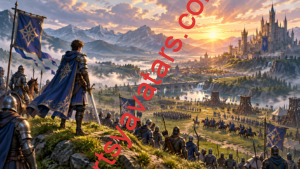 Some role-playing games ask you to master one hero. Unicorn Overlord asks you to think like a commander. 🛡️ Instead of simply choosing attacks for a small party, you build squads, organize formations, prepare tactical instructions, move units around battlefields, and decide which groups are best suited for each objective.
Developed by Vanillaware and released on March 8, 2024, the game is officially available for PlayStation 4, PlayStation 5, Nintendo Switch, and Xbox Series X|S. Its design combines overworld exploration with army-building and tactical battles.
For strategy fans, that combination creates something especially satisfying: victories often begin before the fighting starts.
🎮 What Is Unicorn Overlord Gameplay Like?
The basic structure mixes exploration and tactical warfare. You travel across a fantasy overworld, discover locations, recruit allies, improve your forces, and enter battlefield stages where multiple units can be directed toward objectives.
The official game site explains that battlefield stages involve moving units toward enemy forces and command posts. When opposing units make contact, their individual combat actions follow tactics you configured beforehand, including conditions that determine when certain skills should activate.
That means the strategic question is rarely just, “Which attack should I use?” Instead, you are thinking about questions such as:
- Which characters belong in the same squad?
- Who should stand in the front row?
- Which skills should activate first?
- Which unit should capture an objective?
- Where should cavalry, ranged units, or durable fighters be deployed?
It feels like assembling a collection of small tactical machines and then figuring out where each one works best. 🧠
🛡️ Squad Building Is the Real Puzzle
One of the most engaging parts of Unicorn Overlord gameplay is formation design. The official materials emphasize unit customization and recruiting allies from different backgrounds, while also highlighting a roster of more than 60 characters.
Large rosters can easily become overwhelming in strategy games, but they also create experimentation. A character who seems unimpressive in one formation may become extremely useful when paired with teammates who cover that character’s weaknesses.
Instead of chasing one supposedly “perfect” squad, try building groups for different jobs:
- ⚔️ A fast offensive squad for vulnerable targets
- 🛡️ A defensive squad that can hold important positions
- 🏹 A ranged or support-focused formation
- 🐎 A mobile unit for rapidly changing battlefield situations
- ✨ A specialized squad designed around a particular tactical interaction
The fun comes from testing combinations and watching your preparation turn into effective battlefield behavior.
🧩 Why Pre-Battle Planning Matters
Because combat actions can depend on conditions you configure in advance, your tactical setup matters enormously. The official description specifically notes that players can set conditions controlling how and when skills activate.
Think of those instructions as a simple tactical rulebook for each squad. Powerful ability is being wasted on weak enemies, change its conditions. Healing happens too late, reconsider its priority. Front-line fighter keeps falling before support arrives, change the formation rather than assuming the character is useless.
This creates one of the game’s strongest feedback loops:
Build → Battle → Observe → Adjust → Battle Again. 🔁
Players who enjoy optimization can spend plenty of time refining those small decisions.
🌍 Exploration Gives Strategy More Context
The game is not structured only as a sequence of disconnected battle screens. Official descriptions highlight overworld exploration, regions to travel through, quests, recruitment, resources, liberated settlements, and facilities that become available as areas are restored.
That helps army management feel connected to a larger journey. You are not simply rearranging statistics inside menus—you are moving through a world, discovering opportunities, strengthening your forces, and deciding what to tackle next.
For players who sometimes find pure strategy games too abstract, this exploration layer can make progression feel more adventurous. 🗺️
🔥 Beginner Tips for Unicorn Overlord
1. Do Not Judge a Unit After One Bad Battle
A poor matchup can make a useful squad look weak. Before replacing everyone, check positioning, tactical conditions, enemy composition, and whether the squad is being assigned the wrong job.
2. Build Different Squads for Different Problems
One formation does not need to defeat everything. Specialized groups give you more options when a battlefield changes unexpectedly.
3. Watch Why an Encounter Went Wrong
Do not only look at the result. Look at the sequence. Fighter was defeated first? Ability triggered at the wrong moment? Which enemy created the biggest problem? Those observations tell you what to adjust.
4. Pay Attention to Positioning
Front-row and back-row placement can dramatically change how a formation performs. Durable characters, fragile damage dealers, and support-oriented allies usually benefit from different positioning priorities.
5. Experiment Instead of Copying One Build
Optimization is more rewarding when you understand why a setup works. Try changing one variable at a time and observe the result. That teaches you the system far faster than randomly rearranging an entire squad.
⚠️ Common Mistakes New Players Can Avoid
Ignoring tactical settings: Strong characters can still perform poorly if their abilities activate under inefficient conditions.
Creating only offensive squads: Speed and damage are useful, but some battlefield situations reward durability, control, or support.
Changing everything after one defeat: A small formation or priority adjustment may solve the problem.
Forgetting battlefield objectives: Winning individual encounters is useful, but battlefield stages revolve around larger objectives and command decisions. The official game description specifically emphasizes directing units across stages and completing victory conditions.
🎯 Who Will Enjoy Unicorn Overlord?
You are especially likely to enjoy this game if you like:
- 🧠 Tactical planning
- ⚔️ Fantasy RPG settings
- 🛡️ Building and optimizing squads
- 📊 Comparing classes, abilities, and formations
- 🗺️ Exploration mixed with strategy
- 🔁 Experimenting with systems until everything clicks
Players who prefer completely manual control over every action may need time to adapt to the game’s preconfigured tactical approach. But for gamers who enjoy preparing a strategy and then watching the pieces interact, that system is exactly where much of the appeal lies.
👑 Why the Game Stands Out
The most interesting feature of Unicorn Overlord is not any single mechanic. It is the way several layers work together: recruitment affects squad building, squad building affects encounters, battlefield movement affects matchups, and exploration gives you new reasons to keep improving the army.
The official materials describe a tactical fantasy RPG built around overworld exploration, unit assembly, customizable tactics, and large-scale recruitment.
For strategy-minded gamers, that creates the satisfying feeling that every new recruit or tactical discovery could lead to another clever formation.
🏁 Final Thoughts
Unicorn Overlord is a strong choice for gamers who enjoy planning more than button-mashing. Its appeal comes from organizing squads, learning tactical relationships, exploring a fantasy world, and gradually turning an improvised group of fighters into a coordinated army.
The best advice for newcomers is simple: experiment constantly. Change formations. Adjust tactical conditions. Create specialized squads. Watch what happens. The more you understand the relationships between your units, the more satisfying each victory becomes. ⚔️✨
What type of squad do you enjoy building most—heavy defense, fast offense, cavalry, ranged support, or something completely experimental? Join the gaming conversation at ArtsyAvatars.com. 🎮
Editorial/IP notice: Unicorn Overlord and related official names and properties belong to their respective rights holders. This independent article is commentary for gaming audiences and is not presented as official game content or as an endorsement by the publisher or developer. Original artwork used with this article should avoid reproducing official characters, logos, screenshots, UI, maps, heraldry, promotional artwork, or other protected visual assets.