











Triangle Strategy Review: Choices, Tactics & Replay Value 🎮⚔️
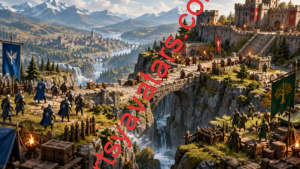 Triangle Strategy is a tactical role-playing game built around turn-based battles, political conflict, and major decisions that can change how the story develops. Square Enix describes the game as a tactics RPG set on the continent of Norzelia, where competing powers struggle over vital resources and the player’s choices influence the path ahead.
For players who enjoy carefully positioning units, weighing difficult decisions, and replaying stories to discover different outcomes, Triangle Strategy offers a slower and more deliberate kind of adventure. Rather than relying mainly on reflexes, it asks you to think about terrain, character abilities, political consequences, and the opinions of your allies.
🧠 What Makes Triangle Strategy Different?
The most distinctive part of Triangle Strategy is the way it combines tactical combat with a decision system based on three convictions: Utility, Morality, and Liberty. Nintendo explains that important choices strengthen these convictions and can influence how events unfold. The game also uses the Scales of Conviction, where members of the protagonist’s group vote on major decisions and can sometimes be persuaded before casting their votes.
This creates an interesting tension. You are not simply choosing a dialogue option and immediately moving on. Important decisions can become debates within your own party, encouraging you to gather information and think about which arguments might convince the people around you.
⚔️ Triangle Strategy Battles Reward Careful Planning
Combat takes place in turn-based tactical encounters where positioning matters. Square Enix highlights strategic battles as one of the game’s core features, while Nintendo describes the experience as one in which players command a group of warriors and take advantage of battlefield situations.
That means rushing forward without a plan can quickly create problems. Elevation, attack direction, movement range, unit roles, and the order in which characters act can all affect your approach. Players who enjoy studying the battlefield before committing to a move are likely to appreciate this style of combat.
One of the satisfying parts of a tactical RPG is turning a difficult situation into a controlled advantage. Blocking a route, protecting a vulnerable ally, creating a safer firing position, or surrounding an opponent can feel more rewarding than simply dealing the largest amount of damage.
🗳️ Choices Can Shape Your Journey
Triangle Strategy gives story decisions real prominence. Official descriptions state that significant choices can affect the player’s route through the story and which allies may eventually join the group.
This structure helps make decisions feel meaningful because the game does not always present a simple “good” or “bad” answer. A practical choice may conflict with an idealistic one. A decision that protects one group could create consequences somewhere else. The result is a story that encourages players to think about what kind of leader they want to be.
It also gives the game strong replay potential. Someone who finishes the story once may be curious to return and make different choices, build a different group, or see how another route changes later events.
🏰 A Political Fantasy Built Around Resources and Rivalries
The story takes place in Norzelia, a continent shaped by conflict over salt and iron. Official Square Enix material describes three major powers whose fragile balance begins to collapse after a new incident destabilizes the region.
That setup gives the game a political tone rather than presenting the world as a straightforward battle between heroes and monsters. Alliances, resources, competing interests, and difficult compromises all contribute to the atmosphere.
If you enjoy fantasy stories where diplomacy and political pressure matter almost as much as combat, this is one of the game’s strongest attractions.
🎨 Presentation: Classic Pixels Meet Modern Depth
Square Enix markets Triangle Strategy using its “HD-2D” presentation, combining pixel-style characters with three-dimensional environments, lighting, and effects.
The result is a visual approach that feels nostalgic without looking like a direct recreation of an older game. Battlefields resemble miniature fantasy stages, while the lighting and depth help locations feel more dramatic than a traditional flat tile map.
For fans of stylized RPG visuals, this presentation is a major part of the experience.
🎯 Who Will Enjoy Triangle Strategy Most?
Triangle Strategy is especially suited to players who enjoy tactical RPGs, turn-based combat, political fantasy, branching decisions, and stories that spend time developing conflicts before major battles occur.
It may be less suitable for someone looking primarily for fast action or constant combat. The game places substantial emphasis on conversations, political developments, and decision-making, so patience is part of the experience.
If you enjoy thinking several moves ahead and debating the consequences of a difficult choice, however, its combination of strategy and story can be very appealing.
🔁 Is Triangle Strategy Worth Replaying?
The game’s route-changing decisions and conviction system provide a natural reason to revisit the story. Because important choices can affect the path forward and potential allies, a second playthrough can be approached with different priorities.
You might choose a different political position, try unfamiliar units, or deliberately pursue a route you avoided the first time. For strategy fans, replaying battles with greater knowledge of the systems can also be rewarding.
🕹️ Where Can You Play Triangle Strategy?
As of October 2026, Square Enix lists Triangle Strategy on Nintendo Switch, PlayStation 5, Xbox Series X|S, Windows, Steam, and Meta Quest. Square Enix announced the PS5, Xbox Series X|S, and Windows releases in August 2025, expanding the game beyond its earlier Switch, Steam, and Meta Quest availability.
🌟 Final Thoughts
Triangle Strategy stands out because it treats strategy as more than battlefield positioning. The player must also think about values, alliances, persuasion, and consequences. Its turn-based encounters reward planning, while its conviction system gives story choices additional weight.
For players who prefer thoughtful tactical battles and politically driven fantasy stories, it is an easy game to place on the “worth exploring” list. If your favorite gaming moments come from solving difficult battles and wondering whether you made the right decision afterward, Triangle Strategy has plenty to offer. 🎮⚔️🧠
What would guide your decisions: Utility, Morality, or Liberty? Share your choice with the Artsy Avatars community and tell us which type of tactical RPG you want us to cover next!
Editorial/IP note: This article is independent commentary for ArtsyAvatars.com. Game names are used only to identify the subject being discussed. No official artwork, screenshots, dialogue, logos, character illustrations, or game assets are reproduced here.