


☢️ S.T.A.L.K.E.R. Call of Pripyat – Still Feels Unforgettable
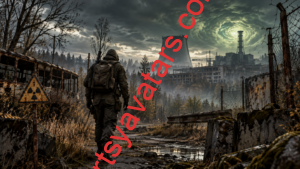 Some games try to make you feel powerful. S.T.A.L.K.E.R. Call of Pripyat often does something far more interesting: it makes you feel small.
One moment you are crossing a lonely stretch of wasteland beneath a gray sky. The next, strange environmental dangers, hostile creatures, desperate survivors, or a sudden emission can completely change your plans. 🌩️
Developed by GSC Game World, Call of Pripyat combines first-person shooting with survival, exploration, horror, role-playing elements, and player choice. Instead of constantly pushing the player toward spectacle, much of its appeal comes from uncertainty.
For gamers who love worlds that feel dangerous even when nothing is happening, this trip into the Zone remains fascinating.
🌫️ S.T.A.L.K.E.R. Call of Pripyat Is About More Than Shooting
At first glance, S.T.A.L.K.E.R. Call of Pripyat may look like another first-person shooter set in a ruined landscape.
Spend some time in its world, however, and the difference becomes clear.
Your surroundings matter.
Your equipment matters.
The route you choose matters.
And sometimes the smartest decision is simply deciding that an unexplored building can wait until morning. 😅
The result is a game where exploration creates its own stories. An abandoned structure is not merely scenery. It might contain valuable supplies, a dangerous anomaly, a hostile creature, another survivor, or absolutely nothing.
That uncertainty gives every journey tension.
🗺️ Welcome Back to the Zone
The story follows Major Degtyarev, who enters the Zone to investigate what happened to a missing military expedition.
That investigation takes players through areas including the marshy surroundings of Zaton, the industrial territory around Jupiter, underground environments, and eventually the abandoned city of Pripyat.
But simply reaching the next objective is only part of the experience.
The real character of the game comes from everything that happens between those objectives.
You may leave shelter intending to complete one mission and suddenly find yourself:
- 🔦 investigating an abandoned structure,
- 🎒 searching for useful equipment,
- ☢️ carefully navigating an anomaly field,
- 👣 following strange sounds through the darkness,
- 🤝 helping another character with a side mission,
- 🔧 repairing or upgrading equipment, or
- 🌩️ desperately searching for shelter before conditions become deadly.
Those unscripted-feeling detours are a huge part of the appeal.
☢️ Anomalies Make Exploration Dangerous
Most open-world games encourage exploration by placing rewards around the map.
Call of Pripyat adds another question:
Can you actually reach the reward alive?
The Zone contains dangerous anomalous areas that can turn apparently harmless ground into a deadly obstacle.
That changes how you look at the environment.
An empty field is no longer automatically safe.
A ruined building is not necessarily shelter.
A strange visual disturbance deserves attention rather than curiosity-driven sprinting. 😬
Learning to carefully read the environment turns exploration into a slow, tense puzzle.
🌩️ Emissions Can Destroy Your Perfect Plan
Few things suit this world better than an event capable of interrupting whatever adventure you thought you were having.
Emissions create exactly that kind of pressure.
When one approaches, exploration suddenly becomes a search for safety.
You may have been hunting equipment, following a mission, or wandering through ruins only moments earlier. Now the priority becomes finding adequate shelter.
It reinforces one of the game’s strongest ideas:
The Zone does not care about your schedule.
That unpredictability helps keep familiar locations tense because safety can disappear quickly.
🎒 Survival Through Preparation
This is not simply a world where the biggest weapon automatically solves every problem.
Players constantly think about what they carry and what condition it is in.
Weapons, ammunition, protective equipment, medical supplies, useful artifacts, and other resources all compete for attention.
Preparation therefore becomes part of the adventure.
Should you carry additional ammunition?
Do you have enough supplies for a longer expedition?
Is that extra equipment worth carrying?
Should you return to safety before going farther?
These small decisions build tension without needing an enemy around every corner.
👹 Darkness Changes Everything
Exploring an abandoned landscape during daylight can already feel uncomfortable.
Exploring it after dark is another experience entirely. 🌑
Visibility shrinks.
Ordinary ruins become threatening silhouettes.
Distant noises become much harder to identify.
And encounters with dangerous creatures become considerably more stressful when you cannot clearly see where they are coming from.
The game includes mutated threats such as the Chimera and Burer, adding another reason to think carefully before entering dark or confined spaces.
This creates something valuable that many action games struggle to achieve:
fear produced by anticipation.
🏚️ Why Abandoned Places Feel So Effective
One of the most memorable aspects of Call of Pripyat is its environment.
Industrial ruins, empty buildings, overgrown landscapes, underground spaces, broken infrastructure, and abandoned urban areas create a world that feels as though life suddenly moved somewhere else.
The scenery does not need constant explosions to remain interesting.
Sometimes a silent corridor is enough.
Sometimes it is a distant light.
Sometimes it is simply the realization that you have wandered much farther from safety than you intended.
That environmental storytelling is one reason the game can feel lonely without feeling empty.
🤝 Side Quests That Make Exploration Matter
Side activities are also important because the Zone is populated by people with their own problems, interests, and relationships.
Some characters can provide information. Others need assistance. Certain situations can be approached in different ways.
These interactions make exploration feel connected to the broader world rather than existing only to fill a map with icons.
Your decisions can also influence how particular stories develop and contribute to different outcomes.
That gives players another reason to pay attention instead of rushing from objective marker to objective marker.
🔧 Equipment Progression Feels Earned
Finding improved gear in many games is simply about watching statistics increase.
Here, better equipment can change how confidently you explore.
A useful weapon upgrade may make combat more manageable.
Improved protection may allow you to investigate environments you previously avoided.
Better preparation may turn a dangerous expedition into a calculated risk rather than a desperate gamble.
Progress therefore feels connected to the player’s growing understanding of the Zone.
🎧 Sound Is One of Your Most Important Tools
A good pair of headphones can make this type of game especially immersive.
Wind moving through abandoned structures, distant gunfire, strange environmental sounds, creatures somewhere beyond your vision, and the general quiet of empty places all contribute to the tension.
When a game teaches you to stop moving simply because you heard something behind a wall, its atmosphere is doing its job. 🎧
🧭 Five Beginner-Friendly Survival Habits
1. Don’t rush unexplored terrain 🚶
Moving carefully gives you more time to notice environmental danger and unexpected threats.
2. Keep useful supplies available 🎒
Going deep into hostile territory without preparation can turn a simple mission into a difficult return journey.
3. Pay attention to your surroundings 👀
The environment often tells you that something unusual is nearby before the danger becomes obvious.
4. Explore side content 🔍
Optional encounters help make the Zone feel alive and can reveal useful opportunities, equipment, information, or story developments.
5. Know when to retreat 🏃
Survival games become much easier once you accept that leaving and returning better prepared is sometimes the smartest victory.
🎮 Who Should Play S.T.A.L.K.E.R. Call of Pripyat?
This game deserves a look if you enjoy:
- ☢️ atmospheric post-apocalyptic worlds,
- 🔫 first-person combat,
- 🎒 survival mechanics,
- 🗺️ open-ended exploration,
- 👻 horror without nonstop scripted scares,
- 🔧 equipment management and upgrades,
- 🤝 meaningful side adventures,
- 🌑 tense nighttime exploration, and
- 🧭 games that allow you to discover things without constantly guiding you.
Players expecting nonstop cinematic action may find its slower moments unusual.
But players who enjoy tension, discovery, environmental storytelling, and a world that refuses to make them feel completely safe may understand why the game has remained memorable.
💭 What Makes the Zone Special?
The secret is not simply radiation, monsters, weapons, or abandoned buildings.
It is uncertainty.
You rarely know exactly how the next journey will unfold.
The path ahead might bring useful discoveries.
It might bring danger.
It might bring another survivor with an unexpected story.
Or it might bring nothing except an eerie walk through the fog.
And strangely enough, even that final possibility can be exciting.
🏁 Final Thoughts
S.T.A.L.K.E.R.: Call of Pripyat shows how powerful atmosphere can be when gameplay, exploration, sound, environmental danger, and player choice all reinforce one another.
The Zone feels memorable because the player is never completely in control of it.
You adapt.
Prepare.
Explore.
Survive.
Then curiosity convinces you to walk toward one more abandoned building. ☢️
And that may be the most S.T.A.L.K.E.R.-like decision of all.
🎮 Join the Conversation
Would you enter the Zone alone after sunset? 🌑
Share your favorite survival-game moments and explore more gaming articles, original avatar inspiration, and gaming culture on ArtsyAvatars.com.
Independent editorial notice: S.T.A.L.K.E.R.: Call of Pripyat and associated intellectual property belong to their respective rights holders. ArtsyAvatars is not affiliated with or endorsed by GSC Game World. Artwork accompanying this article is independently generated and is not official game artwork.