











Citizen Sleeper: Why This Sci-Fi RPG Makes Every Choice Feel Personal 🎲🚀
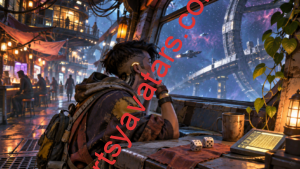 If you enjoy games where a quiet conversation can matter as much as a battle, Citizen Sleeper deserves a place on your radar. 🌌
Released on May 5, 2022, Citizen Sleeper was developed by Jump Over the Age and published by Fellow Traveller. It is a single-player narrative RPG built around a science-fiction setting, player decisions, relationships, resource management, and systems inspired by tabletop role-playing games.
Rather than pushing you from one combat arena to another, the game asks a more unusual question:
How do you build a meaningful life when your time, body, money, and freedom are all limited?
That idea gives Citizen Sleeper a very different rhythm from many traditional RPGs.
🌠 What Is Citizen Sleeper About?
Citizen Sleeper places you in the role of a “Sleeper,” a digitised human consciousness housed inside an artificial body. Your character has escaped the corporation that claims ownership over that body and eventually finds themselves among the people living on a damaged space station called Erlin’s Eye.
From there, survival becomes personal.
You need to find work, manage limited resources, meet people, develop relationships, understand competing interests, and decide what kind of future you want to pursue.
The setting certainly includes danger, but much of the tension comes from uncertainty rather than constant fighting.
Do you spend your limited time earning money? 💰
Help someone who may need you? 🤝
Investigate a new opportunity? 🔍
Or focus on keeping yourself functioning for another cycle? ⚙️
Those choices are at the heart of the experience.
🎲 Citizen Sleeper Turns Dice Into Daily Decisions
One of the game’s defining features is its tabletop-inspired structure.
Citizen Sleeper uses action dice, clocks, drives, and character skills to shape progression. At the beginning of a cycle, the player receives dice that can be assigned to available actions around the station. Clocks track progress and developing situations, while drives help guide longer-term goals.
That sounds simple, but it creates an interesting layer of strategy.
A strong die can make a difficult opportunity more attractive. A weaker roll may force you to rethink your priorities. Because you usually have several things demanding attention at once, every action can carry an opportunity cost.
That makes the dice feel less like random numbers and more like a representation of limited time and uncertain circumstances.
🛰️ A Sci-Fi World Built Around People
The setting may be futuristic, but Citizen Sleeper focuses heavily on human concerns.
Work.
Debt.
Belonging.
Friendship.
Identity.
Security.
Freedom.
The official description presents Erlin’s Eye as a community surviving at the edge of an interstellar capitalist society, while the Sleeper must build relationships, earn a living, and navigate the station’s different factions.
That gives the world a lived-in feeling.
You are not simply passing through a collection of quest markers. You gradually become familiar with people, places, routines, problems, and opportunities.
For players who enjoy character-driven science fiction, that slower form of world-building can be one of the game’s biggest attractions.
🧠 Your Skills Shape How You Approach Problems
Citizen Sleeper includes five character skills:
Engineer, Interface, Endure, Intuit, and Engage.
Progressing through drives can unlock perks and bonuses connected to these abilities, giving players different ways to approach life on the station.
The system encourages you to think about the kind of person—or artificial person—you want your Sleeper to become.
Do you rely on technical knowledge?
Social ability?
Instinct?
Physical resilience?
Digital access?
There is no single personality that the game forces you to adopt, which fits naturally with its broader emphasis on choice.
⏳ Why the “Clock” System Works So Well
In Citizen Sleeper, clocks visually track progress toward events and outcomes. They can represent your own goals as well as developments happening elsewhere on the station.
This creates pressure without requiring a traditional action-game timer.
You can see situations developing.
Know something may eventually happen.
You also know you cannot do everything at once.
The result is a surprisingly effective kind of suspense.
Instead of asking, “Can I defeat this enemy?” the game frequently asks, “What can I afford to ignore?”
That is a very different kind of role-playing tension. 🎯
❤️ Relationships Matter More Than Power
Citizen Sleeper is especially appealing to players who enjoy RPGs for their characters rather than for loot alone.
The people you meet are not simply vendors or quest dispensers. Building connections with them is part of the central experience described by the developer and publisher.
Helping another person may not always produce the most efficient short-term outcome.
That is precisely why the choices can feel meaningful.
You are often balancing survival against empathy, opportunity against loyalty, and personal security against the desire to help someone else.
Those tensions make the game’s quieter moments memorable.
🚀 A Complete Story With Additional Episodes
The current version of Citizen Sleeper includes the three post-launch story episodes FLUX, REFUGE, and PURGE, which add characters, locations, and a later-game storyline to the original experience.
That makes the game particularly attractive for new players discovering it today because the original release and its major post-launch narrative additions are available together.
🎮 Who Should Play Citizen Sleeper?
Citizen Sleeper may be a strong match if you enjoy:
- Story-heavy RPGs 📖
- Science-fiction worlds 🚀
- Meaningful dialogue and relationships ❤️
- Tabletop-inspired systems 🎲
- Resource management and difficult priorities ⏳
- Player-driven storytelling 🧭
- Indie games that experiment with traditional RPG structure ✨
Players looking mainly for fast combat, constant action, or large-scale exploration should know that Citizen Sleeper is fundamentally a narrative-focused RPG. Steam categorizes it as an Adventure, Indie, and RPG title, while its listed user tags prominently include story-rich, dice, sci-fi, narrative, tabletop, text-based, and multiple endings.
🌌 Why Citizen Sleeper Still Stands Out
Many science-fiction games ask you to save a galaxy.
Citizen Sleeper is interested in something smaller—and arguably more personal:
Can you build a life worth living?
Its dice system gives uncertainty a physical form. Clocks turn time into pressure. Its relationships give your decisions emotional weight. And its setting uses science fiction to explore questions about work, ownership, identity, community, and freedom.
That combination is what makes Citizen Sleeper distinctive.
It is not simply about surviving in space.
It is about deciding what survival is for. 🎲✨
🕹️ Final Thoughts
Citizen Sleeper offers a thoughtful alternative to the traditional action-heavy science-fiction RPG.
Its tabletop-inspired mechanics create meaningful limitations, while its character-focused storytelling encourages players to care about the people and communities around them. The result is a game where a single decision about how to spend your day can feel genuinely important.
If you enjoy interactive stories, difficult choices, unusual RPG systems, and atmospheric science fiction, Citizen Sleeper is worth exploring.
What would you prioritize first on a remote space station: money, safety, knowledge, or friendship? Tell us your choice at ArtsyAvatars.com. 🎮🌠