


Nioh: When Every Sword Fight Becomes a Lesson ⚔️👹
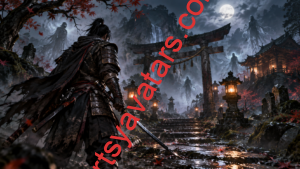 Some action games make you feel powerful immediately. Nioh takes a different approach. It hands you weapons, places danger around every corner, and asks you to earn that feeling of mastery one encounter at a time.
Developed by Team NINJA, Nioh combines intense samurai combat, RPG-style equipment progression, Japanese historical influences, and supernatural creatures inspired by folklore. The result is a game where winning rarely comes from pressing buttons faster. It comes from understanding your weapon, watching your opponent, managing your stamina-like Ki, and knowing exactly when to attack—or retreat. 🎮
If you enjoy demanding action RPGs where improvement feels genuinely rewarding, Nioh offers one of the genre’s most distinctive combat systems.
⚔️ What Makes Nioh Different?
At first glance, Nioh may look like another dark fantasy game built around difficult enemies and repeated deaths. Spend a little time with it, however, and its personality becomes much clearer.
The game puts enormous emphasis on combat technique. Every weapon offers several ways to approach a fight, and players are encouraged to change tactics rather than rely on one universal combo.
A heavy enemy may reward patience and powerful attacks. A faster opponent might require quick movement and shorter combinations. Some battles become easier when you control distance, while others demand aggressive pressure.
This constant decision-making gives Nioh a rhythm that feels closer to a martial arts duel than a simple hack-and-slash encounter.
🥋 Three Stances, Three Ways to Fight
One of Nioh’s defining ideas is its three-stance combat system.
High Stance 🔥
High stance emphasizes heavier attacks and damage. The trade-off is slower movement and greater Ki consumption. It can be excellent when an enemy leaves a large opening, but reckless use can leave you exposed.
Mid Stance 🛡️
Mid stance provides a more balanced approach. It is often comfortable for learning enemy patterns because it offers a useful middle ground between offense, defense, speed, and control.
Low Stance 🌪️
Low stance favors quicker attacks and mobility. It can be useful when you need to reposition frequently or fight opponents that punish slow commitments.
The real magic appears when you stop thinking of these stances as separate fighting styles and start switching between them naturally during combat.
That is when Nioh begins to feel less like a sequence of attacks and more like a conversation between two fighters.
💨 Ki Pulse Changes the Entire Rhythm
If there is one mechanic that separates beginners from increasingly confident Nioh players, it is the Ki Pulse.
Attacking, dodging, blocking, and performing other actions consume Ki. After an attack sequence, correctly timing a Ki Pulse allows you to recover part of that spent resource immediately.
At first, it can feel like one more thing to remember during an already stressful battle. Eventually, however, it becomes part of your natural rhythm:
Attack → watch the enemy → recover Ki → reposition → attack again.
Learning that rhythm can transform combat. Instead of constantly backing away while waiting for resources to return, experienced players can remain active and maintain pressure.
That feeling of improvement is one of Nioh’s biggest strengths. 🧠⚔️
👹 Yōkai Make Every Area Feel Dangerous
Nioh mixes historical warfare with supernatural threats inspired by Japanese folklore. Human warriors can already be deadly, but encounters with yōkai add another layer of unpredictability.
These supernatural enemies often force you to reconsider habits that worked against ordinary soldiers. Their size, movement, range, unusual attacks, and ability to interfere with Ki recovery can turn a familiar battlefield into something much more threatening.
More importantly, they reinforce a key lesson:
Never assume that one strategy works against everything.
The safest way to learn a new enemy is often to observe first, attack second. Watch its movements. Identify the end of a combination. Learn which attacks can be punished. Then gradually become more aggressive.
🗡️ Experimenting With Weapons Is Part of the Fun
Nioh provides a wide selection of weapons and encourages experimentation rather than locking players into a single approach.
Different weapon types have distinct ranges, speeds, attack patterns, and skill options. A weapon that feels awkward during your first mission may later become a favorite once you understand its timing.
This makes experimentation valuable. Instead of asking, “What is the strongest weapon?” a more useful question is:
“Which weapon matches the way I naturally like to fight?”
Do you prefer measured sword duels? Faster combinations? Long-reaching attacks? Heavy strikes that punish mistakes? Nioh gives you room to find an answer through actual play.
🎒 The Loot System Keeps Progression Moving
Combat is only one half of the experience. Nioh also contains a deep equipment and loot system.
Enemies and missions regularly provide new weapons, armor, materials, and other rewards. Equipment can vary in quality and properties, which means two weapons of the same general type may support different builds.
This creates a satisfying loop:
Fight → earn equipment → improve your setup → attempt harder challenges → earn better equipment.
Players who love comparing statistics and optimizing builds can spend a lot of time fine-tuning equipment. Players who prefer straightforward action can still progress by regularly reviewing new drops and keeping gear that suits their current playstyle.
✨ Guardian Spirits, Magic, and Ninjutsu Add More Options
Nioh is not limited to traditional swordplay.
Guardian Spirits and supernatural abilities provide additional tactical possibilities, while Onmyo magic and ninjutsu let players approach difficult situations in creative ways.
These systems are especially useful because Nioh rarely insists that every player solve a problem identically.
A difficult encounter might become manageable after changing weapons. Another might become easier after adjusting equipment, using a ranged option, preparing a useful ability, or simply approaching the battlefield from a different direction.
The challenge is demanding, but the game gives you tools. Learning when to use them is part of the experience. 🧪
💀 Why Dying Does Not Mean You Are Failing
Nioh can be unforgiving. You may enter a fight confidently and lose within seconds. A basic enemy can punish careless positioning. A boss can expose a bad habit you did not even realize you had.
That can be frustrating—but the best way to approach Nioh is to treat each defeat as information.
Ask yourself:
- Did I attack too many times?
- Did I run out of Ki?
- Did I dodge too early?
- Was I using the wrong stance for the situation?
- Did I ignore an obvious opening?
- Would another weapon or ability work better?
When you start answering those questions, the game changes. Death stops being only punishment and becomes feedback.
🧭 Beginner Tips Before You Enter the Battlefield
- Learn Ki Pulse early. It becomes increasingly valuable as combat grows more demanding.
- Do not attack endlessly. Keep enough Ki available to dodge or block.
- Try every stance. High, mid, and low stances all have situations where they shine.
- Experiment with weapons. The first weapon you choose does not have to become your permanent favorite.
- Watch enemies before committing. One patient observation can save several failed attempts.
- Check new equipment regularly. Useful upgrades can easily hide inside a crowded inventory.
- Use the tools the game gives you. Magic, ninjutsu, ranged attacks, Guardian Spirits, and consumables exist for a reason.
🏯 Nioh’s Historical-Fantasy Atmosphere
Another major part of Nioh’s identity is its blend of history and dark fantasy.
The adventure follows William through a version of 16th-century Japan shaped by warfare, political conflict, legendary warriors, and supernatural forces. Historical inspiration gives the world a recognizable foundation, while folklore allows the game to become increasingly strange and dangerous.
The combination works because neither side completely replaces the other. One moment may involve human soldiers and battlefield tactics; the next may introduce an unnatural creature that completely changes the tone of the encounter.
That contrast keeps the journey visually and mechanically interesting.
🎯 Who Should Play Nioh?
Nioh is particularly appealing if you enjoy:
- Demanding melee combat
- Learning enemy patterns
- Character builds and equipment optimization
- Weapon experimentation
- Japanese historical settings
- Folklore-inspired supernatural enemies
- Games where mechanical improvement matters
- Boss battles that reward patience and adaptation
It may be less suitable if you want a relaxing action game where enemies rarely punish mistakes. Nioh expects attention and practice.
🏆 Final Thoughts: Mastery Is the Real Reward
The most memorable thing about Nioh is not simply its difficulty. It is the transformation that happens as you learn.
An enemy that once seemed impossible becomes manageable. A confusing Ki system becomes instinctive. Stance switching stops feeling complicated. Boss attacks that once caused panic start looking like opportunities.
That progression—from uncertainty to confidence—is what gives the game its lasting appeal.
Nioh does not just ask whether your character has become stronger.
It asks whether you have become a better player. ⚔️🔥
🎮 What was the first Nioh mechanic that finally “clicked” for you? Ki Pulse, stance switching, weapon skills, or something else? Share your experience with the ArtsyAvatars community.