


Ghost of Tsushima: A Samurai Adventure Built Around Choice, Beauty, and Battle ⚔️🌾
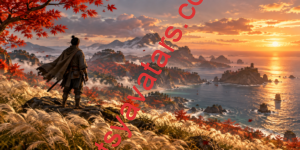 Ghost of Tsushima is the kind of open-world adventure that can make a simple ride across the countryside feel like part of an epic journey. Developed by Sucker Punch Productions, the game places players in a fictionalized version of Tsushima during the Mongol invasion era and follows samurai Jin Sakai as he fights to defend his home. The original PlayStation 4 release arrived on July 17, 2020, while the expanded Director’s Cut is available on PlayStation 4, PlayStation 5, and PC.
Rather than relying only on huge battles, the experience mixes exploration, one-on-one sword fights, archery, stealth, character-driven quests, and moments of quiet discovery. That combination helps explain why the game continues to attract players who enjoy cinematic adventures and open worlds that encourage wandering instead of simply moving from objective marker to objective marker. 🎮
🌊 A Journey Through a Dramatic Island Landscape
One of the strongest parts of Ghost of Tsushima is its presentation of the island itself. Sucker Punch built the game around a large open world filled with countryside, forests, coastlines, settlements, shrines, battlefields, and changing weather. The studio has described exploration as a core part of the experience and designed the environment to feel active and constantly shifting.
Instead of making every journey feel like a checklist, the game frequently uses environmental cues to draw your attention toward points of interest. The result is an open world that often encourages curiosity. You may begin by heading toward a mission and end up exploring a completely different corner of the map.
For players who enjoy virtual photography, slow exploration, dramatic scenery, and cinematic atmosphere, this is a world that rewards taking your time. 🌅
⚔️ Samurai Combat That Rewards Timing
Combat centers heavily on Jin’s katana, which remains his primary weapon throughout the journey. Sucker Punch designed the sword fighting around direct melee encounters while also giving players access to ranged tools and other techniques.
Good timing matters. Blocking, parrying, dodging, changing tactics for different opponents, and choosing the right moment to attack can make encounters feel deliberate rather than chaotic.
Some fights are tense duels. Others involve several enemies with different weapons and attack patterns. The system becomes especially satisfying when you stop button-mashing and begin reading what opponents are doing.
Players who enjoy skill-based action without wanting every fight to become an ultra-punishing endurance test may find a rewarding middle ground here. 🗡️
🥷 The Samurai and the Ghost
The game also gives Jin stealth-oriented methods for dealing with enemy camps and dangerous situations. Official descriptions highlight both traditional sword combat and stealth tactics, allowing players to approach many encounters with a mixture of direct confrontation and surprise attacks.
This creates one of the game’s most interesting gameplay contrasts: do you walk through the front gate and challenge opponents openly, or move through cover and reduce the threat before anyone knows you are there?
You are not permanently locked into one style. A single encounter can begin with careful stealth, turn into archery from a distance, and finish with a sword fight in the middle of a camp.
That flexibility keeps combat from feeling too repetitive and gives different types of action players room to experiment. 🎯
🏝️ What the Director’s Cut Adds
The Director’s Cut expands the experience with the Iki Island story content. PlayStation describes Iki Island as an additional story area, while the PC version includes the broader Director’s Cut package.
For players who finish the main campaign and still want another area to explore, Iki Island provides a natural extension of the adventure rather than simply repeating the exact same map.
The PC release, launched on May 16, 2024, also includes PC-specific options such as unlocked frame rates, ultrawide display support, multiple upscaling technologies, mouse-and-keyboard controls, and support for compatible DualSense features when connected appropriately.
🤝 Legends Adds Multiplayer Variety
The Director’s Cut also supports the game’s Legends multiplayer component. Steam lists online co-op and online PvP among the available features.
That gives players a way to move beyond the single-player campaign and experience combat with or against other players. If you enjoy building skills in the main game but want something more social afterward, Legends can extend the experience.
🎮 Who Is Ghost of Tsushima For?
You may enjoy Ghost of Tsushima if you like:
- ⚔️ Sword-focused action combat
- 🥷 A mix of stealth and direct confrontation
- 🌾 Large scenic environments made for exploration
- 🏹 Archery and tactical ranged attacks
- 📖 Story-driven single-player adventures
- 🏝️ Optional activities and side journeys
- 🤝 Additional online multiplayer modes
- 📸 Games with strong cinematic presentation
The game does contain frequent combat, blood, and intense violence. Steam’s content description specifically notes sword fighting, ranged combat, stealth kills, gore, and other mature scenes, so players looking for a family-friendly adventure should check the relevant age rating before playing.
💡 Beginner Tips Before You Start
1. Explore instead of rushing
The main story will wait. Wandering can lead you to useful discoveries, side stories, upgrades, and some of the game’s most memorable scenery.
2. Learn to parry early
Defensive timing can completely change how comfortable you feel in sword fights. Practice against weaker enemies before relying on it during tougher encounters.
3. Change your approach when necessary
If a direct assault is going badly, try stealth, ranged attacks, positioning, or a different sequence of targets.
4. Pay attention to enemy types
Different opponents create different combat problems. Watching weapons and attack patterns is often more effective than attacking continuously.
5. Give side stories a chance
The world becomes more interesting when you meet characters away from the central storyline and learn what is happening beyond the main conflict.
🌸 Why the Game Remains Memorable
Ghost of Tsushima succeeds because its major systems support the same fantasy: becoming a highly capable warrior moving through a dramatic open world while deciding how each encounter should unfold.
The combat can be intense, but the game also leaves space for quiet travel, scenery, exploration, and character moments. That rhythm helps it feel different from open-world games that keep the player under constant pressure.
Whether you approach it for the sword fighting, stealth, landscapes, story, or the expanded Director’s Cut content, there is a lot to explore before the journey is over. ⚔️🌅
🎨 Final Thoughts from ArtsyAvatars
If your ideal adventure combines cinematic exploration with precise melee combat and flexible stealth, Ghost of Tsushima deserves a place on your gaming radar. Take your time, experiment with different approaches, and enjoy the journey instead of racing toward the final mission.
For more gaming guides, features, and creative gaming content, keep exploring ArtsyAvatars.com. 🎮✨
Editorial/IP note: Ghost of Tsushima and related trademarks belong to their respective rights holders. ArtsyAvatars is not affiliated with or endorsed by Sony Interactive Entertainment, PlayStation, or Sucker Punch Productions. This article is independent editorial commentary and does not reproduce official artwork, screenshots, dialogue, or game assets.